Golf is more than just a game; it’s a complex sport steeped in tradition and rules that can bewilder even seasoned players. Understanding the intricacies of golf scoring is essential for anyone looking to enjoy the game fully. By mastering golf scoring, you not only enhance your playing experience but also appreciate the strategic depth of the sport. This article delves into the essential rules of golf scoring, offering insights to help you navigate the course with confidence.
The Basics of Golf Scoring
Before diving into the nuances, it’s crucial to grasp the basic concept of golf scoring. Unlike most sports, where the aim is to score more than your opponent, golf’s objective is to complete the course in as few strokes as possible. Each hole has a predetermined number of strokes considered standard, known as par. The player’s score is the total number of strokes taken to complete the course compared to the par.
Understanding Par
Par is the baseline measure of a hole’s difficulty. It represents the number of strokes an expert golfer is expected to need to complete a hole. Holes are usually par 3, 4, or 5, with par 3 being the shortest and par 5 the longest. A round of golf typically consists of 18 holes, with a total par for the course ranging from 70 to 72.
Common Scoring Terms
To effectively communicate and understand the game, familiarizing yourself with common scoring terms is essential:
– **Birdie**: Completing the hole one stroke under par.
– **Eagle**: Completing the hole two strokes under par.
– **Albatross (or Double Eagle)**: Completing the hole three strokes under par, a rare feat.
– **Bogey**: Completing the hole one stroke over par.
– **Double Bogey**: Completing the hole two strokes over par.
– **Triple Bogey**: Completing the hole three strokes over par.
The Rules of Golf Scoring
The rules of golf are governed by the R&A and the United States Golf Association (USGA). Adhering to these rules is crucial for maintaining fairness and consistency in the game. Here are some essential rules concerning golf scoring:
Stroke Play vs. Match Play
Golf can be played in various formats, with stroke play and match play being the most common. In stroke play, the player’s total strokes over the course determine the winner. In match play, the game is played hole-by-hole, and the player who wins the most holes wins the match. While the fundamental goal remains the same, the strategies for each format differ significantly.
Counting Strokes
Every swing made with the intention of hitting the ball counts as a stroke, regardless of the outcome. It’s crucial to count every stroke, including penalties, to ensure an accurate score. Maintaining honesty is a key aspect of golf’s integrity.
Penalty Strokes
Penalties are incurred for various infractions, such as hitting the ball out of bounds or into a water hazard. Common penalties include:
– **Out of Bounds**: If your ball lands out of bounds, you must replay the shot and add a penalty stroke to your score.
– **Water Hazards**: If your ball lands in a water hazard, you have several options, including taking a drop near where the ball crossed into the hazard, adding a penalty stroke.
– **Unplayable Lies**: If you determine your ball is in an unplayable position, you can take a drop with a one-stroke penalty.
Recording Scores
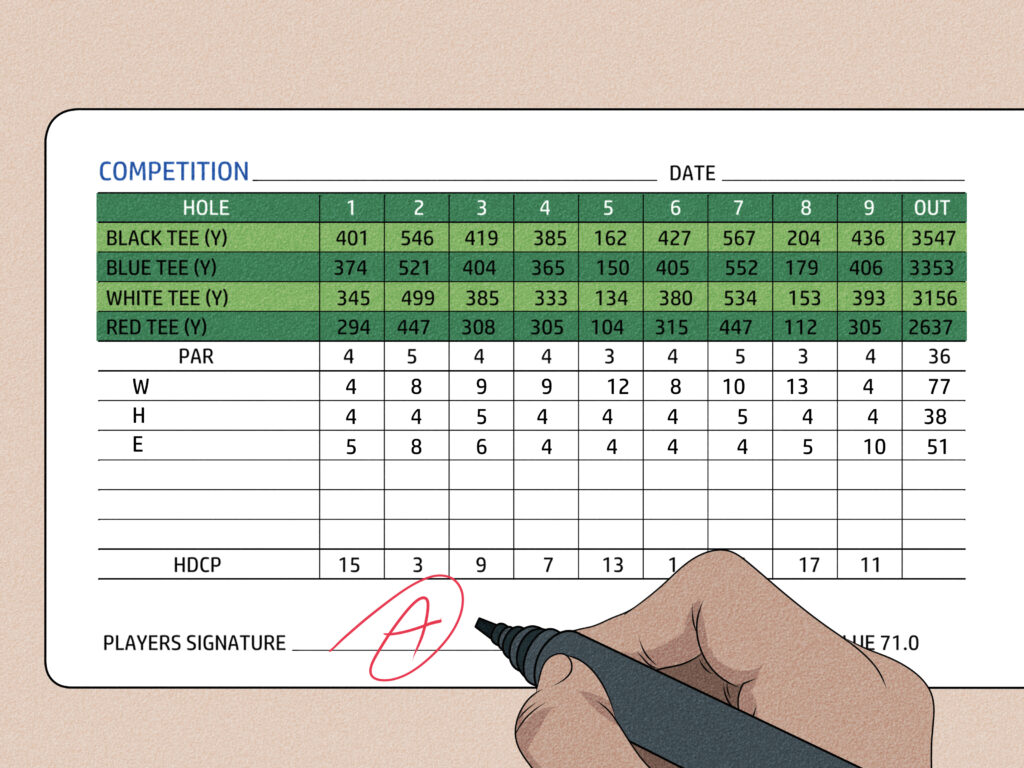
Keeping an accurate scorecard is a fundamental aspect of golf. After each hole, write down your score and ensure it is confirmed by a fellow player or marker. At the end of the round, review your scorecard for accuracy before signing and submitting it.
Strategies for Improving Your Score
Mastering the rules is only part of improving your golf score. Implementing strategic play and honing your skills are equally important.
Course Management
Understanding the layout of the course and planning your shots accordingly can significantly impact your score. Identify areas where risks are unnecessary and choose safer, more strategic shots to avoid penalties and lost strokes.
Short Game Focus
A significant portion of your strokes will be taken within 100 yards of the hole. Focusing on your short game, including chipping, pitching, and putting, can drastically reduce your score. Practice precision and control to improve your efficiency around the greens.
Mental Toughness
Golf is as much a mental game as it is physical. Maintaining focus, managing stress, and staying positive can prevent small mistakes from snowballing into larger issues. Develop routines to keep your mind sharp and avoid distractions.
Common Mistakes and How to Avoid Them
Even experienced golfers can fall victim to common scoring mistakes. Awareness of these pitfalls can help you avoid costly errors.
Incorrect Scorekeeping
Failing to accurately record scores is a common error. Double-check each hole’s score and ensure it matches with your playing partners or marker to prevent discrepancies.
Misinterpreting Rules
Golf’s rules can be intricate and are often misunderstood. Invest time in understanding the rules thoroughly, especially regarding penalty situations, to ensure you’re applying them correctly.
Overlooking Penalties
It’s easy to overlook penalties, especially those related to out of bounds or water hazards. Familiarize yourself with common penalty scenarios and ensure you account for them in your score.
Embracing the Lifestyle of Golf
Golf is not just about the game; it’s a lifestyle that encompasses etiquette, tradition, and camaraderie. Understanding golf scoring and rules enhances your appreciation of the sport and its culture.
Etiquette and Sportsmanship
Golf is renowned for its emphasis on etiquette and sportsmanship. Respect for fellow players, maintaining pace of play, and caring for the course are all integral aspects of the game. Embrace these principles to enrich your golfing experience.
The Social Aspect
Golf is a social sport, providing opportunities to build relationships and network. Participate in club events, tournaments, and social gatherings to immerse yourself in the golfing community and enjoy the camaraderie it offers.
Conclusion
Mastering golf scoring is an essential step in becoming a proficient golfer. By understanding the rules, honing your skills, and embracing the lifestyle, you can enhance your enjoyment of the game and excel on the course. Remember, golf is not just about competition but also about respect, integrity, and the pursuit of personal improvement. So, next time you step onto the green, bring with you the knowledge and appreciation for the game that will make each round a rewarding experience.