Screenshot
Golf is a game of precision, patience, and technique. While many focus on the swing or the stance, it all starts with the grip. The way you hold the club can drastically affect your performance on the course. Whether you’re a beginner or looking to refine your skills, understanding the nuances of the golf grip is essential. This guide will delve into everything you need to know to master your grip and, ultimately, your swing.
Understanding the Importance of a Proper Grip
The golf grip is the foundation of your swing. It serves as the only point of contact between you and the club, directly influencing the clubface’s position at impact. A proper grip can help ensure consistency, control, and power, while an improper grip can lead to slices, hooks, and a lack of distance.
Types of Golf Grips
The Overlapping Grip
The overlapping grip, also known as the Vardon grip, is the most popular among professional golfers. To achieve this grip, the pinky finger of your trailing hand (right hand for right-handed golfers) rests on top of the index finger of your lead hand (left hand for right-handed golfers). This grip promotes unity between the hands and is ideal for players with larger hands.
The Interlocking Grip
The interlocking grip is favored by golfers with smaller hands and provides a secure feel. Here, the pinky finger of the trailing hand interlocks with the index finger of the lead hand. This method was famously used by greats like Jack Nicklaus and Tiger Woods.
The Ten-Finger Grip
Also known as the baseball grip, the ten-finger grip is often recommended for beginners and those with smaller or weaker hands. All ten fingers make contact with the club, similar to holding a baseball bat. While it can offer more power, it may sacrifice control and is less common among seasoned players.
Step-by-Step Guide to Achieving the Perfect Grip
1. Position Your Lead Hand
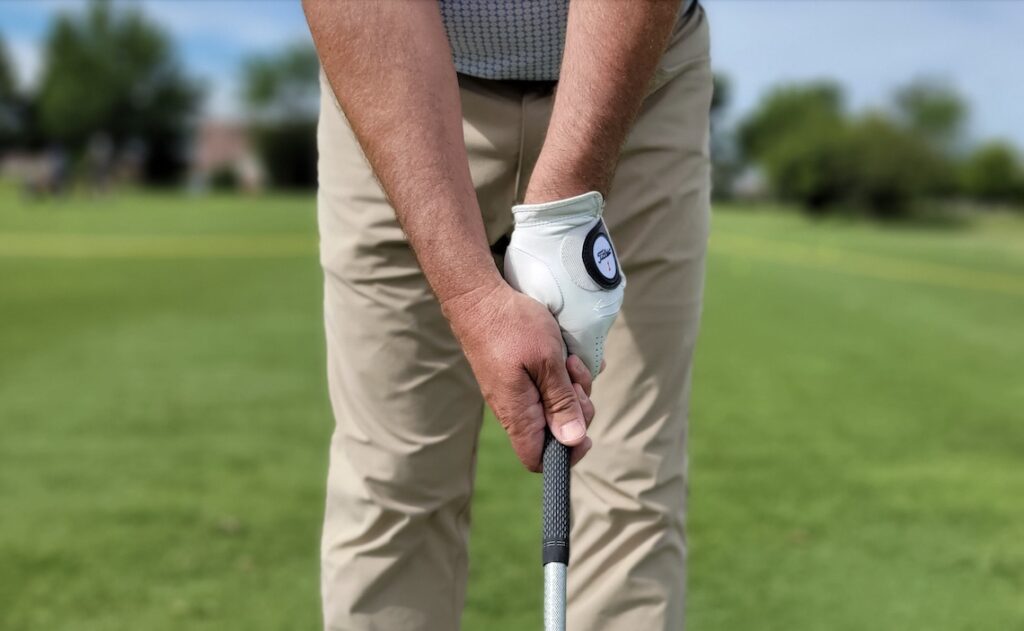
Start by holding the club waist-high in front of you, horizontal to the ground, and square to your target. Place the club in the fingers of your lead hand, making sure to see two to three knuckles when you look down. The thumb should be slightly to the right of the grip’s center.
2. Position Your Trailing Hand
Bring your trailing hand to the club. The palm should face the target, and the thumb should rest along the grip’s center. Ensure your trailing hand’s pinky either overlaps, interlocks, or sits adjacent to the lead hand’s index finger, depending on your grip style.
3. Check Your Grip Pressure
Grip pressure is crucial. Too tight, and you’ll lose fluidity; too loose, and you’ll lose control. Aim for a grip pressure of about a 5 on a scale from 1 to 10. The club should feel secure but not tense.
4. Practice Your Grip
Consistency is key. Regularly practicing your grip will help ingrain the correct positioning into your muscle memory. Consider practicing in front of a mirror or recording yourself to ensure proper hand placement.
Common Mistakes and How to Avoid Them
Gripping Too Tightly
A tense grip can lead to a loss of fluidity in your swing, reducing power and accuracy. Focus on maintaining a relaxed grip, allowing for a more natural and efficient swing.
Incorrect Hand Positioning
Ensure your hands are properly aligned on the club. Misalignment can result in an open or closed clubface at impact, causing errant shots.
Overlooking Grip Size
The size of your grip can significantly affect your performance. If your grips are too small, you may overuse your hands, leading to hooks. Conversely, grips that are too large can restrict hand action, causing slices. Consider consulting a professional to determine the best grip size for you.
Advanced Tips for Refining Your Grip
Focus on the V’s
When you grip the club, the V’s formed between your thumb and index finger should point towards your trailing shoulder. This alignment helps square the clubface at impact.
Experiment with Grip Pressure
While a moderate grip pressure is recommended, some golfers find that slightly adjusting pressure can enhance control or power. Experiment to find what works best for you.
Consider Environmental Conditions
Weather conditions can affect grip. In wet conditions, using gloves or grips with better traction can help maintain control. In dry conditions, ensure your grips aren’t too worn.
The Psychological Aspect of the Grip
Your grip can also influence your mental game. A confident grip can translate into a confident swing. If you’re struggling on the course, revisiting the basics of your grip can serve as a reset, helping to regain focus and control.
Conclusion
Mastering your golf grip is a journey of understanding and practice. It’s about finding what feels natural while ensuring technical precision. Whether you’re a novice or a seasoned player, the grip is a fundamental aspect that can always be improved. By focusing on the right techniques and avoiding common pitfalls, you’ll lay the groundwork for a more consistent and powerful swing.
Remember, the key to a great golf game is starting with the basics and building up from there. With time, patience, and practice, you’ll master your grip and take your golf game to new heights.
#ChatGPT assisted in the creation of this article.