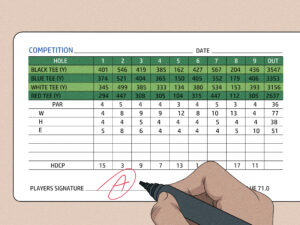
Golf is a game that combines skill, strategy, and a touch of luck. One of its unique features is the handicap system, which allows players of varying abilities to compete on a level playing field. Mastering the golf handicap system is essential for anyone looking to improve their game and fully engage in the sport. This guide will help you understand how the system works, how to calculate your handicap, and how to use it to enhance your golfing experience.
Understanding the Basics of the Handicap System
The golf handicap system is designed to measure a player’s potential ability on the course. It allows golfers to compete fairly with one another, regardless of their skill level. Essentially, a handicap is a numerical representation of a golfer’s playing ability, expressed as the number of strokes over or under par that the golfer is expected to shoot in a round.
The lower the handicap, the better the player. A golfer with a handicap of 0 is considered a scratch golfer, meaning they can play to the course’s par. Conversely, a golfer with a higher handicap has more room for improvement. The handicap system is managed by various golf associations worldwide, with the World Handicap System (WHS) aiming to standardize handicaps globally.
How the Handicap System Works
The handicap system is based on a formula that considers the difficulty of the golf course and the player’s recent performance. Here’s a breakdown of the key components:
Course Rating and Slope Rating
The course rating is a number that represents the expected score for a scratch golfer on a specific course. It considers factors like distance and obstacles. The slope rating measures the course’s difficulty for a bogey golfer compared to a scratch golfer. Slope ratings range from 55 to 155, with 113 being the standard.
Handicap Index
Your handicap index is a portable number that reflects your potential playing ability. It is calculated using the best scores from your most recent rounds, adjusted for course difficulty. The index allows you to compare your abilities with golfers worldwide and is updated regularly to reflect your current form.
Course Handicap
The course handicap converts your handicap index into a number specific to the course you are playing. It accounts for course rating and slope rating, providing you with the number of strokes you can deduct from your score to compete fairly.
Calculating Your Handicap
To calculate your handicap accurately, follow these steps:
Step 1: Record Your Scores
Keep track of your scores over several rounds, ideally at least 20, to establish a reliable handicap. Use an official scorecard and ensure your scores are recorded correctly.
Step 2: Adjust Your Scores
Apply Equitable Stroke Control (ESC) to your scores to prevent a single bad hole from disproportionately affecting your handicap. ESC limits the number of strokes you can record on a hole based on your course handicap.
Step 3: Calculate Differential
For each round, calculate the score differential using the formula:
\[ \text{Differential} = \left( \frac{\text{Adjusted Gross Score} – \text{Course Rating}}{\text{Slope Rating}} \right) \times 113 \]
Step 4: Determine Your Handicap Index
Select the lowest differentials from your most recent rounds, typically the best 8 out of 20, and average them. Multiply the result by 0.96 to obtain your handicap index.
Step 5: Calculate Your Course Handicap
Use the formula:
\[ \text{Course Handicap} = \left( \frac{\text{Handicap Index} \times \text{Slope Rating}}{113} \right) + (\text{Course Rating} – \text{Par}) \]
This number represents the strokes you can subtract from your gross score on that particular course.
Utilizing Your Handicap Effectively
Once you’ve calculated your handicap, you can use it to enhance your golfing experience in several ways:
Fair Competition
Your handicap allows you to compete fairly with players of different skill levels. Whether you’re playing in a friendly match or a formal tournament, handicaps ensure everyone has an equal chance of winning.
Personal Improvement
Tracking your handicap over time provides valuable insights into your progress. If your handicap is decreasing, it indicates improvement in your game. Use this information to set realistic goals and identify areas needing attention.
Challenge Yourself
A handicap can motivate you to push your limits. Aim to reduce your handicap by setting specific targets for your game, such as improving your driving accuracy or putting skills.
Maintaining an Accurate Handicap
Keeping your handicap accurate is crucial for fair competition and personal growth. Here are some tips for maintaining it:
Consistency is Key
Record your scores consistently and accurately. Ensure that you follow the rules of golf and adjust your scores using ESC when necessary.
Stay Informed
Familiarize yourself with the World Handicap System (WHS) and any specific regulations set by your local golf association. Staying informed will help you understand any changes to the system that may affect your handicap.
Regularly Update Your Scores
Submit your scores promptly after each round. Regular updates ensure your handicap reflects your current ability and provides a fair basis for competition.
Conclusion: Embrace the Handicap System
Mastering the golf handicap system is an essential step for any golfer looking to improve their game and engage more fully in the sport. By understanding how the system works, calculating your handicap accurately, and utilizing it effectively, you can compete fairly, track your progress, and set meaningful goals. Embrace the handicap system as a valuable tool in your golfing journey, and enjoy the challenges and rewards it brings to your game. Whether you’re a beginner or an experienced player, the handicap system is your ally in achieving success on the course.