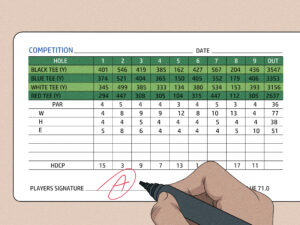
Golf is a sport rich in tradition and variety, offering different formats to suit diverse player preferences and skill levels. Among the most popular formats are match play and stroke play. Each has its unique appeal, strategic elements, and challenges. Understanding the differences between these formats can help golfers choose the one that best fits their style and goals.
What is Match Play?
Match play is a format where two players or teams compete directly against each other on a hole-by-hole basis. The objective is to win more holes than your opponent. Each hole is a separate contest, and the player with the lowest score wins that hole. If both players or teams score the same, the hole is halved. The game continues until one side is ahead by more holes than there are left to play, at which point they are declared the winner.
Strategic Elements of Match Play
Match play introduces unique strategic considerations:
– **Aggressiveness vs. Conservatism**: Players may choose to play aggressively to win a hole outright or conservatively to avoid losing it.
– **Psychological Tactics**: Mind games can play a significant role in match play. Players often engage in strategic maneuvers to unnerve their opponents.
– **Situational Adaptability**: The dynamic nature of match play requires players to adapt their strategies based on the score and their opponent’s performance.
Pros of Match Play
– **Focus on Individual Holes**: Each hole presents a fresh opportunity, making it easier to recover from a bad performance on a previous hole.
– **Exciting and Unpredictable**: The head-to-head competition often leads to thrilling and unpredictable outcomes.
– **Social Interaction**: Match play can enhance camaraderie as players directly interact and engage with opponents.
Cons of Match Play
– **Unforgiving to Mistakes**: A single bad hole can drastically alter the match’s momentum.
– **Less Emphasis on Total Score**: Some players might miss the comprehensive challenge of managing their score over 18 holes.
What is Stroke Play?
Stroke play is the most common format in golf, especially in professional tournaments. In this format, the goal is to complete the course in the fewest total strokes. Every stroke counts, and the player with the lowest aggregate score over a set number of holes (typically 18) is the winner.
Strategic Elements of Stroke Play
Stroke play demands a different strategic approach:
– **Consistent Performance**: Consistency is key, as every stroke contributes to the final score.
– **Course Management**: Players need to navigate the course strategically, minimizing risks and maximizing scoring opportunities.
– **Mental Resilience**: Maintaining focus and composure over a full round is crucial, especially after setbacks.
Pros of Stroke Play
– **Comprehensive Challenge**: Stroke play tests a player’s complete game and ability to manage their score over an entire round.
– **Objective Scoring**: The straightforward nature of stroke play provides a clear and objective measure of performance.
– **Universally Recognized**: This format is widely used and understood, making it a staple in golf competition.
Cons of Stroke Play
– **Pressure of Consistency**: The need for consistent performance can be challenging and mentally taxing.
– **Less Forgiving**: A poorly played hole can have a significant impact on the overall score.
Choosing the Right Format for You
Deciding between match play and stroke play depends on various factors, including personal preferences, skill level, and desired experiences on the course.
Consider Your Playing Style
– **Aggressive Players**: If you thrive on risk-taking and enjoy head-to-head competition, match play might be more suited to your style.
– **Consistent Performers**: Those who excel at maintaining steady performance over 18 holes may find stroke play aligns better with their strengths.
Assess Your Goals
– **Competitive Spirit**: If you’re driven by direct competition and enjoy the psychological aspect of golf, match play can be highly rewarding.
– **Skill Development**: For players focused on honing their overall game and achieving personal bests, stroke play offers a comprehensive test.
Social and Environmental Preferences
– **Social Interaction**: Match play fosters a more interactive and social atmosphere, which can be appealing if you enjoy engaging with opponents.
– **Solitary Focus**: Stroke play allows for a more solitary and introspective experience, focusing on personal performance and course management.
Conclusion
Both match play and stroke play offer unique experiences and challenges that can enrich your golfing journey. Whether you prefer the direct competition of match play or the comprehensive challenge of stroke play, understanding the nuances of each format can enhance your appreciation of the game. Ultimately, the right choice depends on your playing style, goals, and the type of golf experience you seek. Embrace the opportunity to explore both formats and discover which resonates most with you, as each brings its own set of rewards and memorable moments on the course.